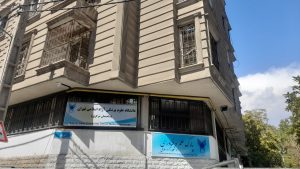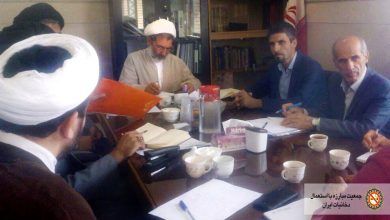
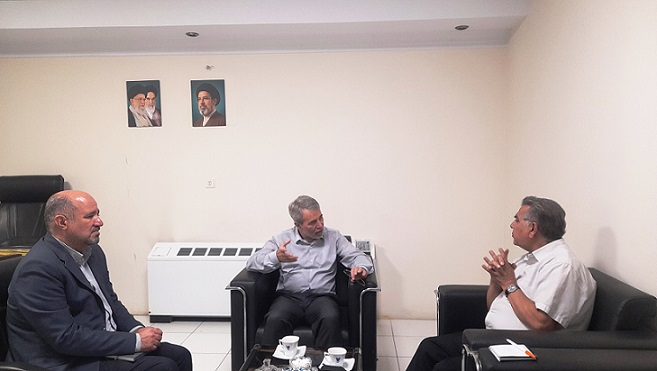
Tehran, Iran — On Monday, September 14, 2025, a joint session was convened between the Iranian Anti-Smoking Association (IASA) and the Islamic Azad University of Medical Sciences to evaluate the operational processes and requirements for attaining “Tobacco-Free University” certification. Held at the University’s central headquarters, the meeting aimed to align the university’s institutional capacities with the rigorous standards required to achieve a tobacco-free environment.
Integrating Global Standards with Local Action
Dr. Sharif Turkman-Nejad, Scientific Advisor to IASA, underscored the importance of tobacco-free environments as a fundamental strategy recommended by the World Health Organization (WHO) for tobacco control. He emphasized that educational, academic, clinical, and administrative spaces must be strictly maintained as tobacco-free zones.
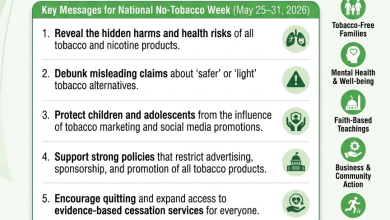
Dr. Turkman-Nejad issued a stern warning regarding the tobacco industry’s aggressive marketing of new nicotine delivery systems—including vaping devices and nicotine pouches—which are specifically designed to entice adolescents and young adults.
Regulatory Framework and Certification
Providing expert guidance on the certification process, Dr. Turkman-Nejad stressed that the university’s affiliated hospitals, clinics, and healthcare centers must be integrated into the tobacco-free strategy. He cited the “Resolution on the Cultural and Social Prevention of Tobacco Use,” ratified by the Supreme Council of the Cultural Revolution and enacted by the President last year, as a robust regulatory framework that provides the necessary mandate to strengthen tobacco control and prevention efforts across academic and medical settings.
Educational Infrastructure and Capacity Building
Highlighting the success of the virtual “PAD Senior Trainer” certification course—developed in collaboration with Shahid Beheshti University of Medical Sciences—Dr. Turkman-Nejad proposed that the Islamic Azad University of Medical Sciences leverage its own academic infrastructure to produce specialized, accredited educational content on tobacco prevention for its student body and staff.
Institutional Commitment and Student Engagement
Dr. Fadaei, representing the University, welcomed the initiative and identified the university’s expansive infrastructure—including three hospitals, two clinics, the School of Public Health, and a dedicated network of faculty and students—as a prime environment for scaling up preventive programs, cessation counseling, and the training of “Health Ambassadors.”
Dr. Hesam Riahi further emphasized the necessity of active student participation, proposing a collaborative model where student unions and academic groups are involved in the co-design and implementation of “Tobacco-Free University” policies.
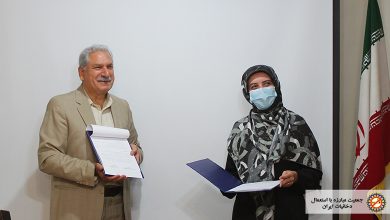
The session concluded with a consensus to formalize this partnership through a Memorandum of Understanding (MoU), to be signed by the President of the University and the Secretary-General of IASA, effectively launching a comprehensive, long-term collaboration.