Statement by the Iranian Anti-Tobacco Association on the Implications of Expanding the Tobacco Industry: Public Health and National Food Security Must Remain Priorities

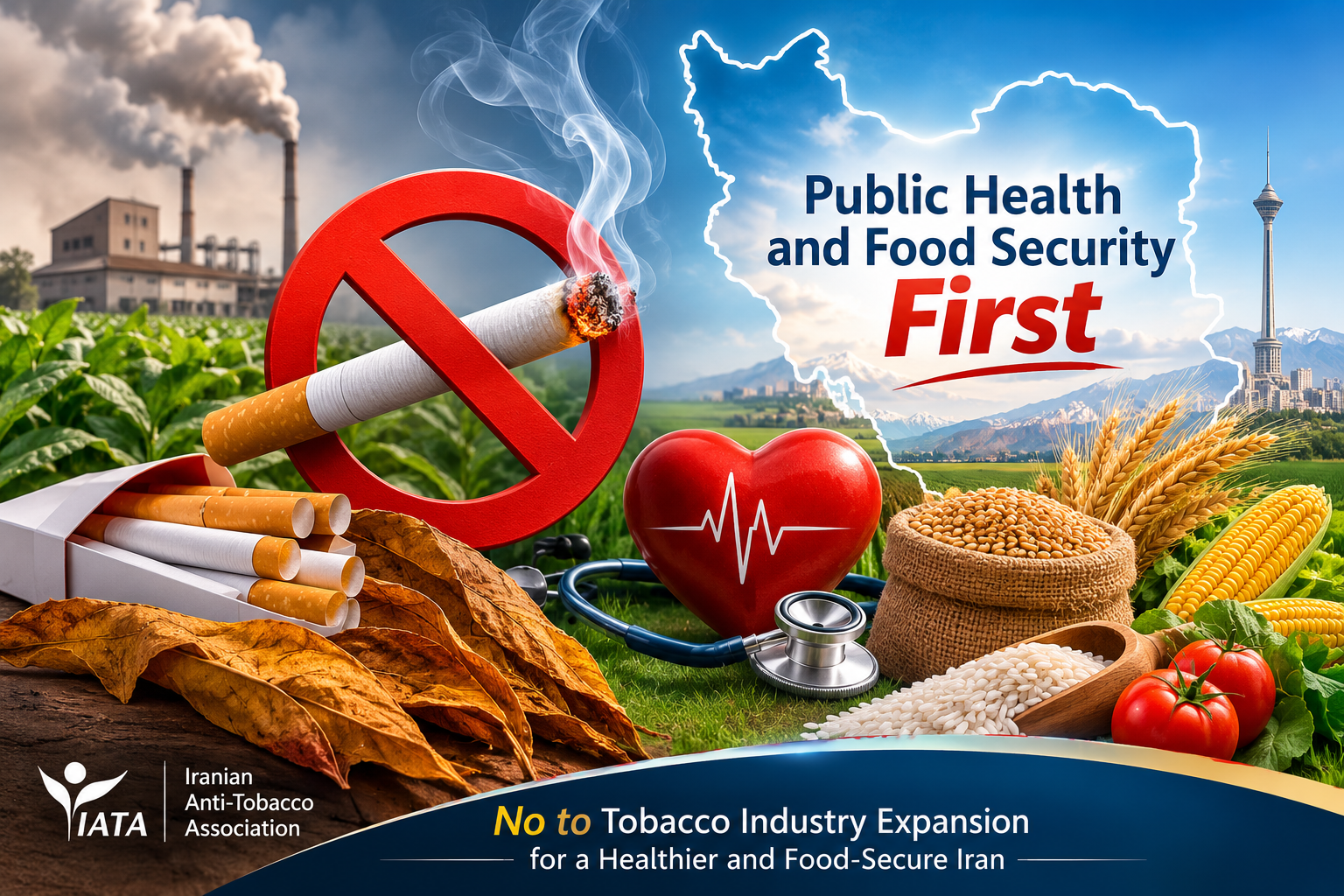
The Iranian Anti-Tobacco Association (IATA) has issued a statement in response to recent remarks by the Minister of Cooperatives, Labour and Social Welfare regarding the productive use of Tobacco Company land, as well as the Governor-General of Gilan Province’s support for expanding tobacco cultivation and manufacturing activities. The Association warns of the potential consequences of such policies for public health and food security, calling on government authorities to comply with national tobacco control laws and regulations and to refrain from policies that promote the expansion of tobacco production and markets.
In the statement, the Association expresses concern over the Minister’s recent remarks concerning the productive use of the Tobacco Company’s land to modernize equipment, increase production, and expand employment. It emphasizes that expanding domestic production capacity and tobacco product exports is incompatible with tobacco use prevention policies and the protection of public health.
While supporting domestic production and job creation is an important economic priority, the substantial health and economic burden associated with tobacco use—including the treatment of cancers, cardiovascular diseases, and chronic respiratory conditions—cannot be overlooked. Economic policymaking should not focus solely on revenues generated through the production and sale of tobacco products while disregarding their far-reaching health consequences.
The expansion of tobacco cultivation on fertile agricultural land in Iran’s northern provinces also poses a threat to food security and the sustainable use of agricultural resources. Such land could instead be allocated to strategic crops, including rice, wheat, barley, maize, and animal feed crops, which are essential to the country’s food supply and agricultural resilience.
In this regard, the recent statements by the Governor-General of Gilan Province in support of expanding tobacco cultivation, increasing the activities of the Tobacco Company, and strengthening the industry’s production capacity are also a source of concern.
Dr. Mohammad Reza Masjedi, Secretary-General of the Iranian Anti-Tobacco Association, criticized these approaches, emphasizing that they run counter to Iran’s Comprehensive National Tobacco Control and Combat Law and its relevant implementing regulations, the resolutions of the Supreme Council of Cultural Revolution and the Supreme Council for Health and Food Security, as well as the repeated emphasis by the President of the Islamic Republic of Iran on prioritizing public health as a fundamental responsibility of the government.
Dr. Masjedi further noted that when senior government officials fail to comply with laws and regulations, expecting tobacco users, businesses, professionals, retailers, and operators of tobacco-use venues to observe and comply with these requirements becomes untenable.
The Iranian Anti-Tobacco Association stresses that the productive use of the Tobacco Company’s assets must not become a means of increasing production capacity or expanding the market for tobacco products. The country’s economic resources and capacities should instead be directed toward sustainable job creation, the development of healthier industries, and the promotion of public health.
Accordingly, the Association calls on the Ministry of Cooperatives, Labour and Social Welfare, the Ministry of Agriculture-Jihad, and the Governorate of Gilan to uphold national tobacco control laws and policies, prevent the expansion of tobacco cultivation, and develop support programs to facilitate the transition from tobacco farming to strategic agricultural crops. Public health and the country’s long-term interests must remain at the forefront of policymaking.