
On the occasion of World No Tobacco Day (May 31, 2026)
Dr. Mohammad Reza Masjedi
Department of Pulmonary Medicine, Tobacco Control Research Center [TCRC], Iranian Anti-tobacco Association, Cancer Control Research Center, Cancer Control Foundation, Shahid Beheshti University of Medical Sciences, Tehran, Iran
This year’s World Health Organization (WHO) theme is “Countering the Tactics of the Tobacco Industry.” Tobacco use is the primary cause of mortality from cancer, cardiovascular diseases, respiratory illnesses, and numerous other detrimental health conditions. Currently, more than 8 million deaths occur annually due to direct tobacco consumption, alongside 1.6 million deaths among non-smokers—particularly children and women—who are involuntarily exposed to secondhand smoke.
Globally, there are approximately 1.3 billion tobacco users, 80% of whom reside in low- and middle-income countries. Following the adoption of the WHO Framework Convention on Tobacco Control (FCTC) in 2005 (Iranian calendar 1384), 183 countries have become parties to this treaty. Strict adherence to its laws and regulations, particularly the six core principles of this treaty (MPOWER)—which represent the first international commitment to public health—operationalizes the realization of this global ideal:
- 1. Monitoring tobacco use and prevention policies
- 2. Protecting people from tobacco smoke
- 3. Offering help to quit tobacco use
- 4. Warning about the dangers of tobacco
- 5. Enforcing comprehensive bans on tobacco advertising, promotion, and sponsorship
- 6. Exponentially increasing taxes on tobacco products
In Iran, despite the ratification of the Comprehensive National Tobacco Control Law in 2006 (1385), the current societal landscape does not reflect an acceptable paradigm in this regard. According to this law, any form of direct and indirect advertising is strictly prohibited and subject to financial penalties. Furthermore, the supply of any flavored and aromatic tobacco products is banned based on approved executive bylaws and guidelines. Nevertheless, we continue to witness the widespread distribution and all forms of advertising in cyberspace, home entertainment networks, and the establishment of visually appealing and theatrical tobacco points of sale across the country. Unfortunately, adherence to laws and regulations is being circumvented, and corporate profit is being prioritized over public health. According to global statistics, tobacco products kill half of their consumers. Despite regional and international efforts to combat tobacco, the tobacco industry mafia employs deceptive and manipulative tactics to entrap the youth, particularly young girls and women.
The current situation in the country is profoundly alarming. The prevalence of tobacco use among young women and girls has demonstrated a terrifying escalation of between 40% to 135% in recent years, and the age of initiation has dropped to under 15 years. The supply and aggressive marketing of tobacco products have heavily targeted the nation’s youth.
No tobacco product is safe or harmless. Alongside traditional cigarettes, waterpipes (hookahs), cigars, and pipes; heated and smokeless tobacco products, e-cigarettes (vapes), bidis, kreteks, and oral nicotine pouches are all established risk factors for cancer, cardiovascular, and respiratory diseases. They also serve as a gateway to subsequent substance addiction and social delinquency. The proportion of income expended on tobacco in impoverished and low-income households directly precipitates poverty, malnutrition, and a higher susceptibility to various diseases. According to the most fundamental principles of economics, and as evidenced daily in Iran, the inflation of product prices leads to a reduction in consumption. The analogy of a butcher closing his shop due to rising meat prices and the public’s inability to purchase it serves as a tangible confirmation that the successful strategy employed by countries leading in tobacco control is the implementation of progressive taxation on tobacco products. According to the WHO FCTC, to which the Islamic Republic of Iran is a signatory, at least 75% of the retail price should consist of taxes. In our country, this figure remains below 30%. Despite Article 8 of the 2006 (1385) parliamentary law mandating an annual 10% increase in tobacco taxes—meaning it should exceed 200% by 2026 (1405)—we are still drifting further away from our neighboring countries, where taxes constitute 76% to 84% of a cigarette pack’s price. Realized taxes in most developing countries (including ours) are significantly lower compared to developed nations, while governments spend 2 to 3 times the revenue generated from these taxes on treating tobacco-related diseases. The individual and collective detriment is a critical indicator of tobacco use that receives insufficient attention.
The pretext of smuggling has been weaponized to justify the negligence in implementing logical tax increases in the country. It is imperative to note that globally, one in 10 cigarettes is smuggled (10%). In this regard, practical and effective solutions (such as track-and-trace systems for tobacco products) have been proposed. Unfortunately, instead of adhering to these mechanisms, there is a push to expand domestic cigarette production and oppose logical tax increases, to the extent that over the course of a decade, cigarette production has doubled from 40 billion to 80 billion sticks annually. Under the current circumstances, where cruel sanctions have been imposed on our country—even affecting vaccines, medicines, and medical equipment—the only industry inexplicably exempt from sanctions, highly profitable, and thriving is the tobacco industry, which is unfortunately expanding due to superficial perspectives and unacceptable justifications. It should be noted that approximately 60% of domestically produced cigarettes are manufactured by major transnational corporations (e.g., JTI and BAT), while the national tobacco company accounts for only about 10% of production. The tobacco industry and trade, through various methods including tax evasion, often operate outside the purview of the country’s approved laws and regulations.
Promoting “light” cigarettes or novel products as “harm reduction” alternatives is an acknowledged and deceitful tactic of the global tobacco mafia. Scientific analyses have demonstrated that glycerol, pyridine, ethylene glycol, acetone trisulfide, methylglyoxal, and heavy metals such as tin, nickel, and lead are among the severe toxic and hazardous substances present in these products. Furthermore, novel compounds have been isolated from these products that are not found in conventional cigarettes, posing unprecedented health risks. Even products marketed as “nicotine-free” have been found, through specialized laboratory testing, to contain nicotine or its derivatives and synthetic analogues.
The progress made in tobacco control is severely threatened by the machinations of the tobacco mafia. The introduction of electronic cigarettes, nicotine pouches, and novel nicotine products featuring diverse flavors, additives, and sweet or cooling sensations makes them increasingly appealing, consistently targeting the youth demographic. Furthermore, the exposure of pregnant women to secondhand smoke can result in miscarriage, neonatal mortality, and delayed brain development in children.
The commitment of governments in the South-East Asia Region—historically home to high rates of tobacco consumption—has yielded the most dramatic and rapid decline in global consumption levels. In the period from 2000 to 2024, tobacco use in men decreased from 70.1% to 37.4%, and in women from 38% to 9.3%. In fact, this region has successfully achieved the 40% reduction target set by the World Health Organization. Notably, the Maldives has become the first country globally to implement a comprehensive ban on tobacco use.
Recently, the United Kingdom enacted legislation prohibiting the sale of tobacco products to individuals born after 2008, stipulating substantial financial penalties for violators. France, in addition to prohibiting smoking in indoor public spaces, has extended this ban to all maritime beaches and public parks.
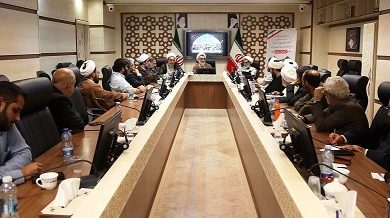
Over the past 2.5 years, following the establishment of the “Tobacco Control Desk” at the Secretariat of the Supreme Council of the Cultural Revolution, and through more than 200 expert man-hours across relevant sectors, 5 comprehensive policy packages have been developed for: the Ministry of Education, Higher Education, Cyberspace, Media, and Public Spaces. Following their approval in February 2026 (Bahman 1404), these packages were officially issued by the Honorable President to the relevant executive bodies. With the ratification of these 5 policy packages, our country will become a pioneer and a driving force in upstream documents for the “Tobacco-Free Generation” ideal. This initiative has commenced under the PAD project (Prevention Against tobacco Dependence) in schools, acting as a focal point connecting to homes, mosques, neighborhoods, and districts, thereby continuing the momentum towards tobacco-free cities. Operational models of this project have been implemented in the counties of Varamin, Robat Karim, and Qom, and with the directive of the Honorable Minister of Education, it has been expanded to 100 counties nationwide. It is highly anticipated that through coordination with the Ministry of Science and higher education institutions (Islamic Azad University, seminaries, etc.) for “Tobacco-Free Universities,” the collaboration of the Ministry of Health for “Tobacco-Free Health Centers and Hospitals,” the provision of cessation centers in these counties, and the support of the Deputy for Public Rights of the Prosecutor General’s Office, we will witness triumph in this arduous journey. The “Tobacco-Free Generation” project, which originated in New Zealand and Australia and subsequently reached Canada, has recently been placed on the European Union’s agenda for 2035, while Finland has formalized the achievement of this goal by 2030. Ultimately, the entire global community is moving forward with resolute commitment against the colossal assault of the health-threatening tobacco mafia. Guided by these international models and fortified by strong domestic upstream documents, we must strive to witness a healthier and more promising environment within our nations.